I decided to create a visual argument, defending some of the decisions Donald Miller made that are a little "controversial" among fellow Christians. It isn't finished yet, and I know it is difficult to see my argument from these--there are a few important slides that aren't completed yet, so there are some gaps in the argument you see. But when it is done, I hope to communicate the idea that even though in the book Don hung out "with the wrong crowd," so did Jesus. Sometimes Christians get so caught up in our own little subculture, I think we pick on things that aren't all that important. There are different aspects of that idea that I am addressing. Once it's done, I think I will turn the slides into a movie if I can figure out how to do it.
Edit: Somehow I couldn't get it in this post, but it is in the next one.
Friday, March 6, 2009

Saturday, February 28, 2009
Who needs religion, any way?
In the second part of Dawkins’ argument, he claims that in disputes, religion always trumps other ideas, because it assumes a sort of sacredness. I find it odd that he treats religion as just another opinion, such as a man thinking “‘his wife is beautiful and his children smart.’” Dawkins seems to disregard the importance religion plays in developing a complete view of the world around us. Near the end of his argument he finally asks:
What is so special about religion that we grant it such uniquely privileged respect?
Hmm… Perhaps it is because religions have an inconceivable tendency of instruction in morals and ethics. Or maybe it is because religion offers answers to the most important questions about things such as life and death. Or maybe—and I know this is stretching the imagination—it is because religion offers meaning and a purpose to life. I don’t know really… I guess it is rather silly that we give religion any importance, after all.
All sarcasm aside, I truly find it disturbing that Dawkins and others put so little value on religion, and think it can be so easily replaced with other things, such as science. I started thinking about this while I was watching Expelled and the interviews with all of the scientists, but particularly Dawkins. The argument was centered on the seeming conflict between science and religion. However, I’m not so sure this is how the issue should be argued, because religion and science are two completely different things. Science can offer answers about the natural world around us and even about our bodies and ourselves, but it cannot tell us why we are here, if there is good and evil, or tell us what “the meaning of life” is. These are questions that every human being struggles with, and needs answers to. While science can, of course, validate religious beliefs, it cannot be a replacement for them.
Alarmingly, however, many of the scientists interviewed on Expelled, including Dawkins, seem to think that religion is unnecessary and science can tell us all we need to know. If I’m not mistaken, one of the scientists in the movie literally says that science will eventually replace religion. This simply cannot be true—this way of thinking is logically fallacious and does not follow. Lets say, for example, that a vibrant art program is enacted in schools throughout the country and suddenly everyone thinks that art is now vitally important, while mathematics is worthless (an idea I almost agree with :P). Now, they want to replace math and teach only art instead. This is pure silliness—math and art are two completely different things, and one cannot be replaced by the other. But this is exactly what would be happening if religion was replaced by science. Although science is important, it cannot ever take the place of religion. Only religion offers answers to the deepest questions faced in life, and it will remain important always.
What is so special about religion that we grant it such uniquely privileged respect?
Hmm… Perhaps it is because religions have an inconceivable tendency of instruction in morals and ethics. Or maybe it is because religion offers answers to the most important questions about things such as life and death. Or maybe—and I know this is stretching the imagination—it is because religion offers meaning and a purpose to life. I don’t know really… I guess it is rather silly that we give religion any importance, after all.
All sarcasm aside, I truly find it disturbing that Dawkins and others put so little value on religion, and think it can be so easily replaced with other things, such as science. I started thinking about this while I was watching Expelled and the interviews with all of the scientists, but particularly Dawkins. The argument was centered on the seeming conflict between science and religion. However, I’m not so sure this is how the issue should be argued, because religion and science are two completely different things. Science can offer answers about the natural world around us and even about our bodies and ourselves, but it cannot tell us why we are here, if there is good and evil, or tell us what “the meaning of life” is. These are questions that every human being struggles with, and needs answers to. While science can, of course, validate religious beliefs, it cannot be a replacement for them.
Alarmingly, however, many of the scientists interviewed on Expelled, including Dawkins, seem to think that religion is unnecessary and science can tell us all we need to know. If I’m not mistaken, one of the scientists in the movie literally says that science will eventually replace religion. This simply cannot be true—this way of thinking is logically fallacious and does not follow. Lets say, for example, that a vibrant art program is enacted in schools throughout the country and suddenly everyone thinks that art is now vitally important, while mathematics is worthless (an idea I almost agree with :P). Now, they want to replace math and teach only art instead. This is pure silliness—math and art are two completely different things, and one cannot be replaced by the other. But this is exactly what would be happening if religion was replaced by science. Although science is important, it cannot ever take the place of religion. Only religion offers answers to the deepest questions faced in life, and it will remain important always.
Friday, February 27, 2009
Delusional?
As I was reading the excerpt from Dawkins’ The God Delusion, I had a few different thoughts. At first, he talks about “religiousness” in a nonsupernatural sense, which, although I understood what he meant, still seemed weird to me.
Let me sum up Einsteinian religion in one more quotation from Einstein himself: 'To sense that behind anything that can be experienced there is a something that our mind cannot grasp and whose beauty and sublimity reaches us only indirectly and as a feeble reflection, this is religiousness. In this sense I am religious.' In this sense I too am religious, with the reservation that 'cannot grasp' does not have to mean 'forever ungraspable'. But I prefer not to call myself religious because it is misleading. It is destructively misleading because, for the vast majority of people, 'religion' implies 'supernatural'. Carl Sagan put it well: '. . . if by â€�“God†one means the set of physical laws that govern the universe, then clearly there is such a God. This God is emotionally unsatisfying...it does not make much sense to pray to the law of gravity.'
If I am understanding his argument correctly, Dawkins basically says that there is some kind of desire in us when we study science and the beauty of the earth, but this is only a sort of admiration of the unfathomably vast Universe we live in, and has nothing to do with religion. However, some people mistakenly believe this desire/admiration is a feeling of the supernatural, and that is why they are “religious.” I am, quite honestly, a bit perplexed by this. If there is no God, as Dawkins believes, then why would we have any desires or feelings like this about nature? To my knowledge, humans are the only creatures on earth that experience this phenomenon. I think the awe and wonder experienced when studying nature is actually an indication that God does exist. I do not know any other reason why evolved homo sapiens, such as ourselves, would have to experience these “feelings,” if it is not from a desire that has been placed in us by a Creator. And by the way, that is exactly what Paul writes in Romans 1 and 2.
Let me sum up Einsteinian religion in one more quotation from Einstein himself: 'To sense that behind anything that can be experienced there is a something that our mind cannot grasp and whose beauty and sublimity reaches us only indirectly and as a feeble reflection, this is religiousness. In this sense I am religious.' In this sense I too am religious, with the reservation that 'cannot grasp' does not have to mean 'forever ungraspable'. But I prefer not to call myself religious because it is misleading. It is destructively misleading because, for the vast majority of people, 'religion' implies 'supernatural'. Carl Sagan put it well: '. . . if by â€�“God†one means the set of physical laws that govern the universe, then clearly there is such a God. This God is emotionally unsatisfying...it does not make much sense to pray to the law of gravity.'
If I am understanding his argument correctly, Dawkins basically says that there is some kind of desire in us when we study science and the beauty of the earth, but this is only a sort of admiration of the unfathomably vast Universe we live in, and has nothing to do with religion. However, some people mistakenly believe this desire/admiration is a feeling of the supernatural, and that is why they are “religious.” I am, quite honestly, a bit perplexed by this. If there is no God, as Dawkins believes, then why would we have any desires or feelings like this about nature? To my knowledge, humans are the only creatures on earth that experience this phenomenon. I think the awe and wonder experienced when studying nature is actually an indication that God does exist. I do not know any other reason why evolved homo sapiens, such as ourselves, would have to experience these “feelings,” if it is not from a desire that has been placed in us by a Creator. And by the way, that is exactly what Paul writes in Romans 1 and 2.
Thursday, February 26, 2009
Rhetorical Strategies in Expelled
One thing I really liked in the movie was all of the old movie clips, and I think they served as very effective rhetorical strategies. First of all, they provided visual interest and kept the viewer engaged in a serious topic that might have otherwise become uninteresting after a while. They also very effectively reinforced the ideas presented in the movie. At times, I think they even served as a way to send strong messages to the viewers—too strong to be put into words without attracting a lot of criticism. (I am thinking of several of the Nazi sequences, as well as the scene with the bully beating up the little boy. These are essentially saying that the people suppressing the Intelligent Design theory are not acting intellectually, but rather, are on the same level as big bullies—intellectual Nazis.) The repeated “Wall” imagery throughout the movie was also very effective. It really created the feeling that scientists and scientific research is being painfully suppressed, and gave Intelligent Design a sense of “forbiddenness.” It played up the “freedom in science” aspect of the movie, which was really the main focus. The movie wasn’t really saying that Intelligent Design is true, it only argued that it should at least be given the chance to be discussed, and I think the movie clips were very effective in reinforcing this.
Monday, February 23, 2009
Teenagers and Homeschooling
I have to say, I really did enjoy doing my research paper. It was really interesting, and I learned some things I was not expecting. As I was doing all of my reading, homeschooling kept popping into my head. Although I did mention school in the paper, I didn't talk about homeschooling because the argument was just about teenagers in general, and I didn't want it to turn out as a "Public School Vs. Homeschool" thing. But even though homeschooling wasn't the focus of my paper, as I was reading more about the way teens develop and learn, and the problems they sometimes have, I found myself thinking "This wouldn't be a problem if they were homeschooled," or "Homeschooling would probably improve that a lot, too."
For example, as it turns out, teenagers are much more sensitive to the influence of their peers than adults are. Teens are very capable and while they may be able to make good decisions by themselves, when they're with their friends they tend to make much poorer choices. So this of course made me think of traditional schools, where students spend almost all of their time with people their own age. In a homeschool setting, students don't spend as much time with peers, and so I would guess that they would be better able to make good decisions.
Also, it seems, not surprisingly, that teenagers who are given more responsibilities tend to be more responsible. One thing that I've heard from homeschool teens quite frquently is that they have to do a lot of their work on their own. I've also heard other people, such as college professors, say that their formerly homeschool students tend to be much more independant workers. I have experienced this, too, because I have three younger siblings who need my mom's help and so most of the time I am left to do my school work on my own. This seems to be characteristic of homeschooling, and I think it is something that does help students become more independant and responsible.
I just thought this was interesting, because I did not think about homeschooling at all when I first started the research for my paper.
For example, as it turns out, teenagers are much more sensitive to the influence of their peers than adults are. Teens are very capable and while they may be able to make good decisions by themselves, when they're with their friends they tend to make much poorer choices. So this of course made me think of traditional schools, where students spend almost all of their time with people their own age. In a homeschool setting, students don't spend as much time with peers, and so I would guess that they would be better able to make good decisions.
Also, it seems, not surprisingly, that teenagers who are given more responsibilities tend to be more responsible. One thing that I've heard from homeschool teens quite frquently is that they have to do a lot of their work on their own. I've also heard other people, such as college professors, say that their formerly homeschool students tend to be much more independant workers. I have experienced this, too, because I have three younger siblings who need my mom's help and so most of the time I am left to do my school work on my own. This seems to be characteristic of homeschooling, and I think it is something that does help students become more independant and responsible.
I just thought this was interesting, because I did not think about homeschooling at all when I first started the research for my paper.
Friday, February 6, 2009
Spread the Words
Yesterday my sister showed me a website called www.savethewords.org. It has obscure words up for adoption, meaning that you "adopt" the word into your speech and use it as much as possible. I'm not sure if the site was created in seriousness or in jest, but when I saw it I laughed very hard. It is such a funny idea! I just thought you might like to see it, especially because we are supposed to be building our vocabularies. Maybe you can find some good words to incorperate into your essays and such. If not, at least you will learn some cool new words to impress your friends with. ;-)
Wednesday, January 21, 2009
The more things change...
In consequence of the New Year and the new president, I have been thinking about change, which, ironically, is exactly what our new president has promised America. It’s funny how at this time of year everyone has such strong resolutions. I used to work at the YMCA, and I remember how, starting January 2nd, there would be people standing in line at 5:30 in the morning, waiting for the doors to open because it was a new year, and this year they were going to work out every single day. That lasted for about three weeks. Then the parking lot was empty again.
Now, America has a new President. President Obama campaigned promising to bring change to Washington, change to America. Actually, every politician has, in some way, shape, or form, tried to bring change to his office. Everyone seems to have high hopes for President Obama, especially since he is our first African-American president. He is viewed as the pinnacle of a long-awaited dream, a symbol of progress in the United States. While having an African-American man as president does mark the long way we have come, I can’t help but thinking of the other ways that we as a country have not progressed. Maybe I’m being pessimistic, but I just think it’s important not to get too caught up in the nostalgia of this historic moment, and put too much hope in Obama. He is, after all, just a human like the rest of us, and none of us are perfect.
While I was doing my critical reading questions yesterday, something in the passage by Emerson stuck out to me. He was talking about the writer’s ability to speak to the hearts of many different kinds of people, from different times and places. “There is some awe mixed with the joy of our surprise, when this poet, who lived in some past world, two or three hundred years ago, says that which lies close to my own soul, that which I also had well-nigh thought and said.” This is true. How many times has it seemed like a story or novel or poem said exactly what you were thinking or feeling? The reason for this is, I think, because we are all humans, and no matter what era we come from, or what region of the world we live, we are united by our humanness. We may think that we, 21st century Americans, could have nothing in common with someone from several hundred years ago, but really we share many of the same hopes, dreams, fears, aspirations and mistakes.
Yesterday was a historic day in America as our 44th president was inaugurated, but as far as progress is concerned, we still have a long way to go. People have been prideful, lustful, stubborn, mean, selfish, greedy, and stealing, lying, cheating, hating, and murdering since the dawn of time. Even Cain and Able, the very first brothers, could not get along. Although in racism America has made mounds of progress, there are so many other areas that we continue to fall short in. Why? Because we are humans—we have always made mistakes and we always will. I just hope that in celebrations of President Obama, we don’t smugly forget our other shortcomings.
Yesterday I had trouble finding a cartoon that I liked. (Some political cartoons can be so mean!) But here is a nice one I found that even goes along with the theme of my post. http://candorville.com/comics/2009-01-18-inauguration.jpg

Now, America has a new President. President Obama campaigned promising to bring change to Washington, change to America. Actually, every politician has, in some way, shape, or form, tried to bring change to his office. Everyone seems to have high hopes for President Obama, especially since he is our first African-American president. He is viewed as the pinnacle of a long-awaited dream, a symbol of progress in the United States. While having an African-American man as president does mark the long way we have come, I can’t help but thinking of the other ways that we as a country have not progressed. Maybe I’m being pessimistic, but I just think it’s important not to get too caught up in the nostalgia of this historic moment, and put too much hope in Obama. He is, after all, just a human like the rest of us, and none of us are perfect.
While I was doing my critical reading questions yesterday, something in the passage by Emerson stuck out to me. He was talking about the writer’s ability to speak to the hearts of many different kinds of people, from different times and places. “There is some awe mixed with the joy of our surprise, when this poet, who lived in some past world, two or three hundred years ago, says that which lies close to my own soul, that which I also had well-nigh thought and said.” This is true. How many times has it seemed like a story or novel or poem said exactly what you were thinking or feeling? The reason for this is, I think, because we are all humans, and no matter what era we come from, or what region of the world we live, we are united by our humanness. We may think that we, 21st century Americans, could have nothing in common with someone from several hundred years ago, but really we share many of the same hopes, dreams, fears, aspirations and mistakes.
Yesterday was a historic day in America as our 44th president was inaugurated, but as far as progress is concerned, we still have a long way to go. People have been prideful, lustful, stubborn, mean, selfish, greedy, and stealing, lying, cheating, hating, and murdering since the dawn of time. Even Cain and Able, the very first brothers, could not get along. Although in racism America has made mounds of progress, there are so many other areas that we continue to fall short in. Why? Because we are humans—we have always made mistakes and we always will. I just hope that in celebrations of President Obama, we don’t smugly forget our other shortcomings.
Yesterday I had trouble finding a cartoon that I liked. (Some political cartoons can be so mean!) But here is a nice one I found that even goes along with the theme of my post. http://candorville.com/comics/2009-01-18-inauguration.jpg
Saturday, January 10, 2009
I feel terrible that I have not blogged anything lately! My time has been so consumed with writing piles of scholarship essays and getting ready for piano auditions, I'm afraid I might have neglected my writing a bit. But I am actually in the middle of writing a short anecdote, and will be posting it shortly. For some reason, I felt the need to write a little satire. At least I think this could be considered satire. Well, I suppose that can be decided once it's finished.
Friday, December 19, 2008
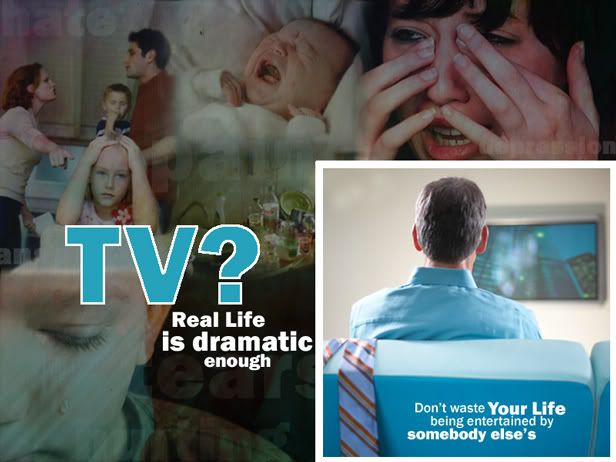
My Visual Argument
Well, here it is. For some reason I can't get it to go any bigger, but here is the link to the full size. http://i214.photobucket.com/albums/cc137/GalenaNutumnent/Visual-Argumentweb.jpg

Friday, December 5, 2008
Peace on Earth?
Happy Holidays. We say Merry Christmas. Santa Clause. Jesus is the reason for the season. Happy Winter Solstice.
Oh dear what is Christmas coming to? Normally I try not to let all of this nonsense bother me, but this year it seems worse than usual and it can really suck the Christmas spirit out of a person. If someone does not want to celebrate Christmas, that is fine. They don’t have to. No one is forcing them. What I don’t understand, however, is why certain people who disagree with the Christmas message, that God came to earth in the form of a human baby, feel so determined to ruin it for everyone else. No doubt you have heard something of the controversial sign that was placed in Washington.


This sign is completely uncalled for and inappropriate. Not only is it negative and demeaning towards Christians and anyone celebrating Christmas, but it also makes atheists look bad. I know that not all atheists are mean Scrooges with no motive other than to destroy other people’s opinions, but that is what this sign certainly suggests. If I were an atheist, I would not want this to be my representation at Christmas.
It is simply not necessary to spite other people’s opinions in the name of free speech. Constitutionally, there is no reason why a nativity scene or other Christmas decoration cannot be displayed in a public place. “Separation of Church and State” has been so taken out of context, I doubt Thomas Jefferson would have ever penned the phrase if he knew how it would be abused. He wrote it in a letter to a group of Christians, Baptists I believe, who were afraid the government would control religion too much. (It is not even in the Constitution!) He assured them that that would never happen, because there was a “wall of separation between Church and State,” so that the government could not interfere with the affairs of the Church. Now, this phrase has been reversed, to mean that the church and religion cannot be in any way connected with the government. This is not what Jefferson meant at all. In fact, he and many other Founding Fathers openly supported religion and Christianity, thought it was a beneficial and necessary part of the country, and even commended prayers, Bible verses, and religious things being included in schools, governmental ceremonies, and other public places. Now the “separation” phrase has been so misused.
As no one is forced to celebrate Christmas, I do not understand why certain people feel so inclined to speak so negatively about it. To my knowledge, there are not protests of this sort at Muslim, Hindu, or Buddhist holidays, or celebrations of other religions. Why Christmas? I just do not see any reason to take away from one of Christians’ most sacred celebrations in this manner.
Oh dear what is Christmas coming to? Normally I try not to let all of this nonsense bother me, but this year it seems worse than usual and it can really suck the Christmas spirit out of a person. If someone does not want to celebrate Christmas, that is fine. They don’t have to. No one is forcing them. What I don’t understand, however, is why certain people who disagree with the Christmas message, that God came to earth in the form of a human baby, feel so determined to ruin it for everyone else. No doubt you have heard something of the controversial sign that was placed in Washington.
This sign is completely uncalled for and inappropriate. Not only is it negative and demeaning towards Christians and anyone celebrating Christmas, but it also makes atheists look bad. I know that not all atheists are mean Scrooges with no motive other than to destroy other people’s opinions, but that is what this sign certainly suggests. If I were an atheist, I would not want this to be my representation at Christmas.
It is simply not necessary to spite other people’s opinions in the name of free speech. Constitutionally, there is no reason why a nativity scene or other Christmas decoration cannot be displayed in a public place. “Separation of Church and State” has been so taken out of context, I doubt Thomas Jefferson would have ever penned the phrase if he knew how it would be abused. He wrote it in a letter to a group of Christians, Baptists I believe, who were afraid the government would control religion too much. (It is not even in the Constitution!) He assured them that that would never happen, because there was a “wall of separation between Church and State,” so that the government could not interfere with the affairs of the Church. Now, this phrase has been reversed, to mean that the church and religion cannot be in any way connected with the government. This is not what Jefferson meant at all. In fact, he and many other Founding Fathers openly supported religion and Christianity, thought it was a beneficial and necessary part of the country, and even commended prayers, Bible verses, and religious things being included in schools, governmental ceremonies, and other public places. Now the “separation” phrase has been so misused.
As no one is forced to celebrate Christmas, I do not understand why certain people feel so inclined to speak so negatively about it. To my knowledge, there are not protests of this sort at Muslim, Hindu, or Buddhist holidays, or celebrations of other religions. Why Christmas? I just do not see any reason to take away from one of Christians’ most sacred celebrations in this manner.
Subscribe to:
Posts (Atom)